In our new feature, we're introducing you to some of our wonderful team as they answer five questions about their role at Forestry England.
Today we're taking five with Hazel Stone, our National Curator of Contemporary Art, to discover the active role art and sculpture plays in the identity of our sites across England.
What’s something about your day-to-day work that would surprise people?
"Many people are surprised to learn that Forestry England has one of the largest outdoor art collections in the UK.
Our forests are home to permanent and temporary artworks, commissions, performances and participatory projects embedded within working landscapes that are constantly changing and cared for."
Can you describe a moment that made you think: ‘This is exactly why I do this’?
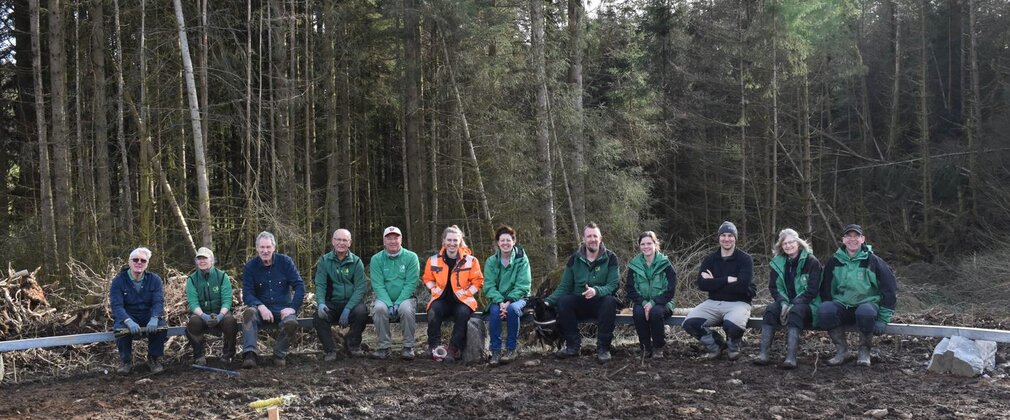
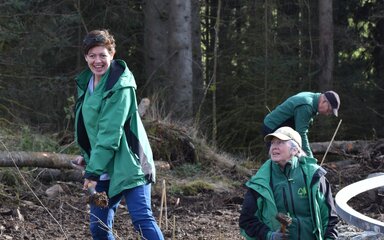
"Honestly, it’s almost every time I bring colleagues, communities and artists together and head out into the forest.
Seeing the rich diversity of knowledge, perspectives and interpretations of the landscape is always inspiring. Those moments highlight our shared responsibility and privilege in protecting and caring for these special places."
How would you describe the work Forestry England do in three words?
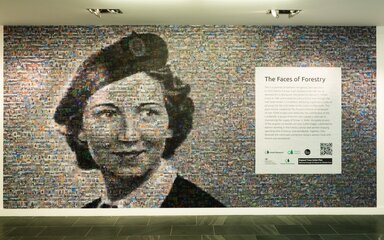
"Care."
"Resilience."
"Grow."
What advice would you give to someone looking to get into the environmental sector?
We can all play a part in caring for the environment, whatever our skills or background. A designer might use their creativity to tell stories about environmental progress or inspire positive behaviour change. A sculptor might create a reason for families to venture deeper into the forest, pause, reflect and experience culture and nature together.
My advice would be: stay curious. Sit in nature and enjoy its magic and beauty, then ask yourself what had the biggest impact on you.
Seek out volunteering opportunities to learn more and meet like-minded people. Visit different forests and pay attention to the trees, plants and wildlife you encounter. Forestry England also has fantastic learning resources that can help deepen that understanding. There are so many paths into environmental work, and often the most unexpected ones are the most rewarding.

To finish off, can you let us know your favourite tree and why?
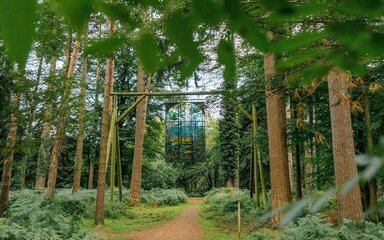
This is such a difficult question—and I think I know why. Trees hold so many stories. At first, I thought of a Yoko Ono installation we hosted at Forestry England’s Grizedale Forest, where people were invited to write their wishes and hang them in the trees. It became a quiet but powerful exchange of hope, remembrance, gratitude and deeply personal messages.
In terms of species, I’m drawn to Scots pine, Kentish Cobnut and Sweet Chestnut, especially Sweet Chestnut, with its extraordinary fruiting forms and long history of human connection. But when I really sit with the question, it’s the next one that will be planted.
If you enjoyed learning about Hazel's role, discover how you can help us grow the future by joining our nationwide team.
From foresters to finance managers, our team are responsible for pioneering change within the timber, forestry, leisure and wellbeing sectors. We plan forests, plant climate resilient species and protect these spaces for wildlife and people every day.
Become a part of our story today as we write the next chapter for the environmental sector.