

A tall and majestic tree, Douglas fir is named after botanist David Douglas who sent the first seeds to Britain from North America in 1827. It is one of the tallest and most valuable conifer species growing in Britain.
Originally introduced from North America in the 19th century, it is widely planted for timber production and can be recognised by its soft needles and distinctive hanging cones.Find out more about this tree species, from its appearance to the uses of its timber.
Douglas fir facts and figures
- The tallest tree in England is a Douglas fir standing over 60 metres tall, found at Nutcombe Bottom in Somerset.
- Its natural range is western North America, from British Columbia to California.
- Douglas fir bark is non-flammable and offers great protection against forest fires.
- Its botanical name, Pseudotsuga menziesii, commemorates Scottish botanist Archibald Menzies who discovered the tree in 1791.
How to identify Douglas fir trees
Heading out into the forest? Here are the top things to look out for to help you spot a Douglas fir:
- bark: thick and corky, purplish brown, with deep gaps running up the trunk.
- needles: dark green, short, flat, soft and flexible with paler stripes underneath.
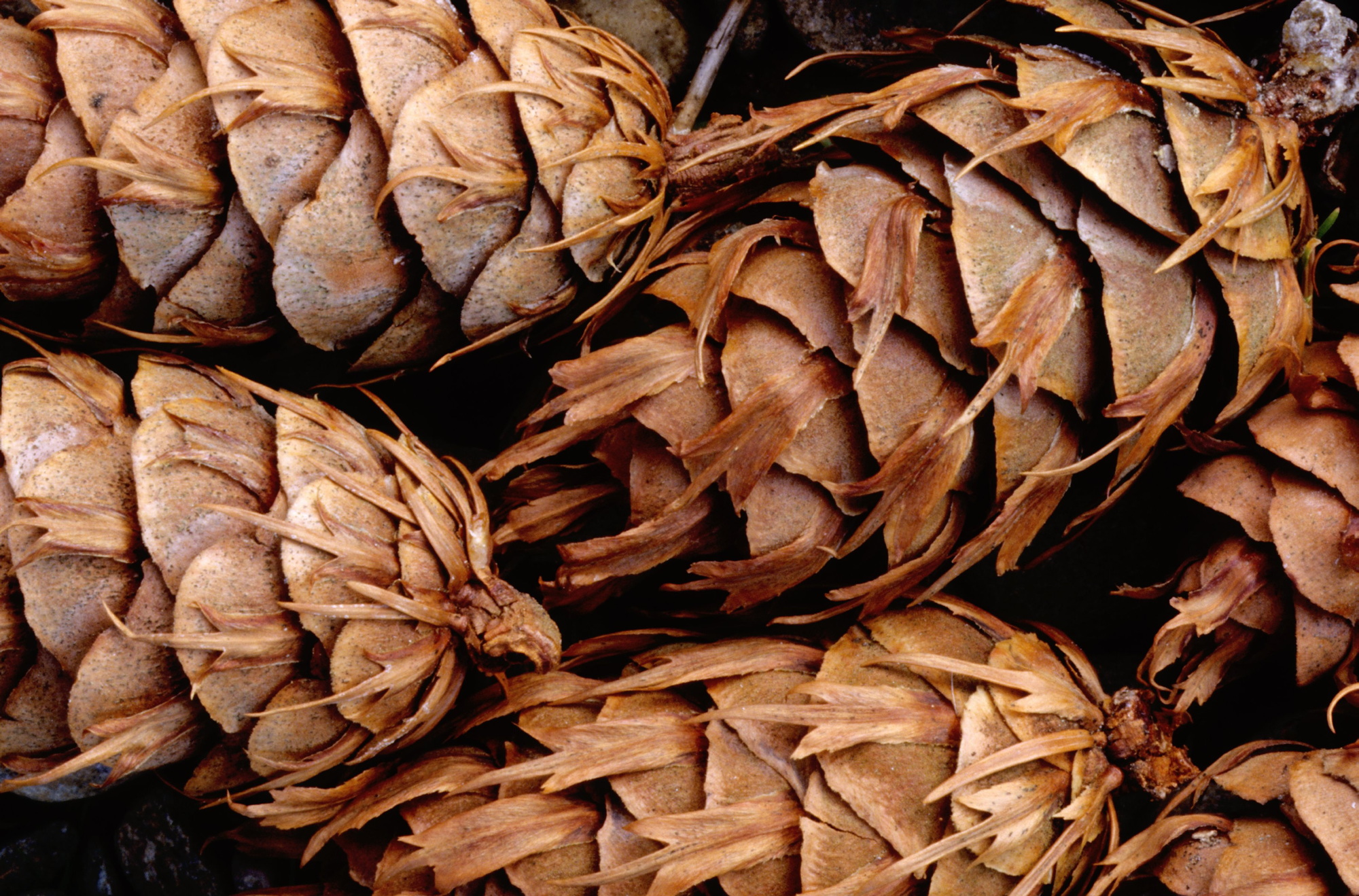
- cones: oval-shaped cones hang from the ends of branches, with a three-point feathery bract on every scale.
Image Gallery
Click the thumbnail buttons below the large image to view the different images full size.


How Douglas fir is used
One of the strongest and finest softwoods, Douglas fir timber is excellent quality and can compete with hardwoods such as the finest quality oak. A major timber species in its native North America, it is often imported as 'Oregon pine'.
Originally grown in this country for ornamental purposes, it is now a valuable tree for structural timber in buildings and construction work, and produces high quality plywood and veneers. It is also used for joinery, furniture and panelling and suitable for wood pulp for making paper and chipboard.

Douglas fir: future forestry and wildlife benefits
Douglas fir is widely used in the forestry sector and will continue to be valuable in a warming climate due to its moderate fire resistance and tolerance of summer droughts.
Mature Douglas firs provide year-round shelter and nesting opportunities for woodland wildlife. Their seeds are a food source for birds and small mammals, including red squirrels, while large trees can support birds of prey and other forest species. In mixed forests, Douglas fir can contribute to a diverse range of habitats alongside providing sustainably produced timber.
Frequently asked questions
Douglas fir trees are not often used as Christmas trees in England and the UK, but are more commonly used in this way in the USA.
The cones of a Douglas fir tree are oval-shaped. They hang from the ends of their branches, and have a three-point feathery bract on every scale.
- Bark: thick and corky, purplish brown, with deep gaps running up the trunk.
- Needles: dark green, short, flat, soft and flexible with paler stripes underneath.
- Cones: oval-shaped cones at ends of branches, with a distinctive three-point feathery bract on every scale.
Douglas fir trees are dark green. Their needles often have a paler stripe on the underside.

