Growing the nation's forests
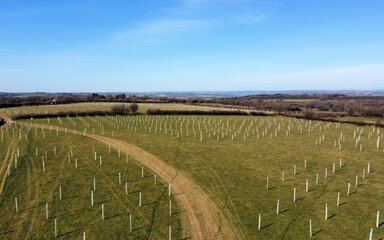
We're creating a new Coronation Wood in North Devon to commemorate the Coronation of His Majesty King Charles III. The 54-hectare woodland, which is called Burriott Wood, is just a short distance from Eggesford Forest, where the Forestry Commission planted its first trees in 1919. Our work is still underway at Burriott Wood, but once the woodland is established, it will be open to the public, giving local people a new green space to enjoy, as well as being a thriving home for wildlife, an important carbon store, and, in time, a source of sustainable timber.
This is one of many new woodlands we're creating at Forestry England to help grow the nation's forests. The work has been made possible thanks to the government's Nature for Climate Fund programme.
Work in progress...
We started working on this new woodland in 2024. This included carrying out detailed surveys of the site to better understand its wildlife, soil conditions, and local environment. Later that year, we held a public consultation on our draft designs for the woodland, inviting local people and key organisations to have their say and help shape our plans.
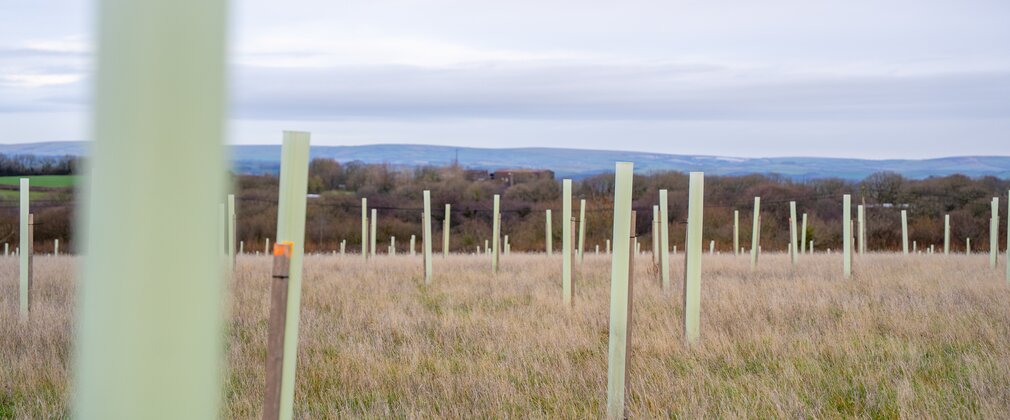
Since then, work has progressed at Burriott Wood, and in spring 2025, we finished planting the first saplings. We will now carefully manage the site as the trees grow.
What to expect at Burriott Wood
Once our work is complete at Burriott Wood, this woodland will be open to the public. Local communities will be able to explore the new site on foot, using a series of grass paths through the woodland.
We have planted a mix of different tree species on the site. This is to ensure we are providing different habitats for a range of wildlife and to help the woodland withstand changing climate conditions. Tree species include Douglas fir, sessile oak, Oriental spruce, and small-leaved lime. We will also be planting native shrubs such as hazel and elder in more open areas, including the edges of the woodland.
Frequently asked questions
Yes! Burriott Wood will be open to the public and provide a quiet space for local people to enjoy and connect with nature. Once the woodland is established, we plan to dedicate it under the Countryside and Rights of Way (CROW) Act so that people can access and explore the site.
Note that there are currently no plans to create a car park at Burriott Wood, and access will primarily be through the network of existing footpaths in the area.
Burriott Wood will provide rich, varied habitats for wildlife. Our designs include open spaces and widely spaced trees to create a diverse environment that will benefit a wide range of species. This may include foraging and commuting bats, badgers, otters, small mammals, foraging and nesting birds, reptiles, common amphibians, and invertebrates. The woodland will also help protect and improve the ancient semi-natural woodland in the area, along with the wildlife that calls it home.
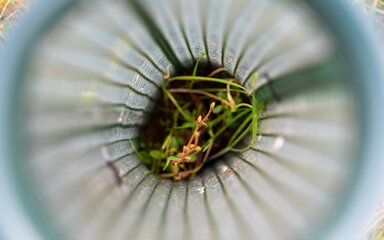
Yes, we use tree guards where we need to, to protect young saplings that are extremely vulnerable to damage from deer and other wildlife. Wherever possible, we have used fencing instead so that only small areas require tree guards. Where we need to use tree guards, they will always be made from recyclable plastic.